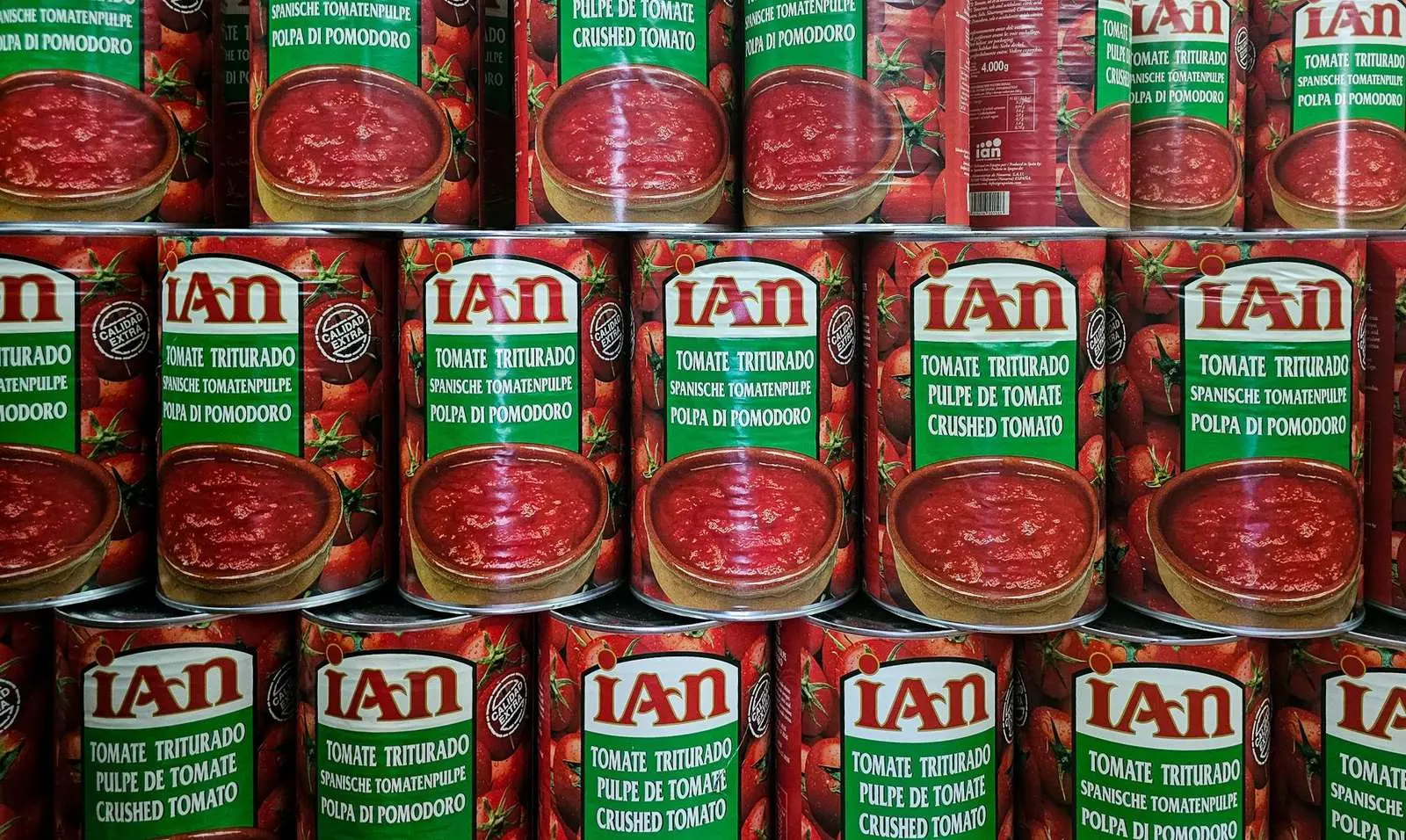
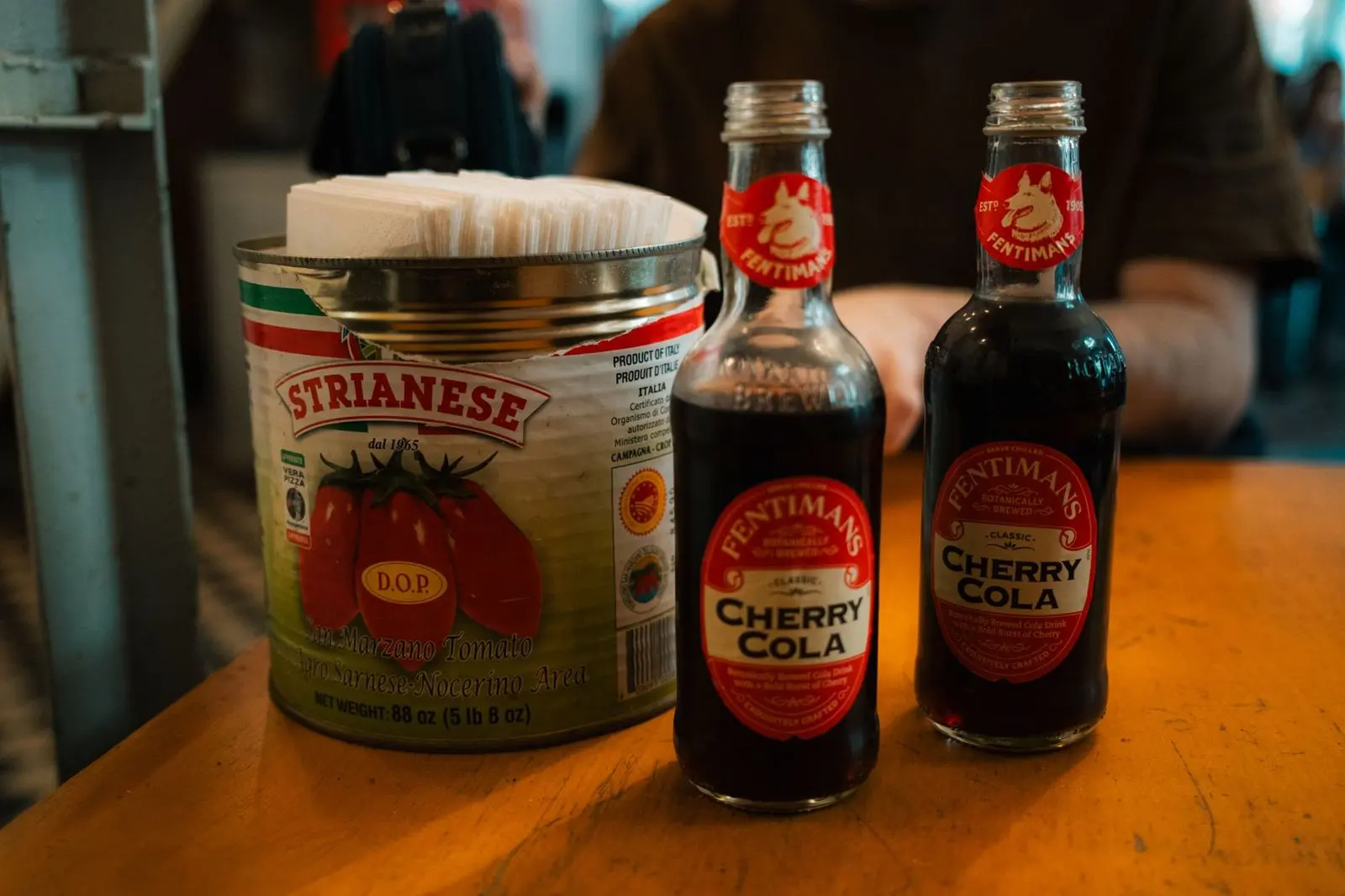
Standing in front of a shelf of tins, you want to know what san marzano tomatoes really are. They’re an elongated tomato from one Italian growing area, and the protected label means a specific place and process.
If you are building a kitchen from scratch, the guide to italian cooking basics shows where this ingredient fits.
| Item | Value |
|---|---|
| Fresh fruit length | 60-80 mm |
| pH of the finished peeled product | Between 4.2 and 4.5 |
| Table salt allowed | Up to 3% of net weight |
| Drained weight of the tin or jar | Not less than 65% of net weight |
| Average field yield | About 60-80 tonnes per hectare |
| Latest name amendment (EU regulation) | 8 August 2019 |
These figures come from the product specification and the August 2019 EU implementing regulation. Rules and figures can change, so check the source before you rely on them.
What are San Marzano tomatoes?
A San Marzano is a tomato ecotype with a long, narrow fruit. The product specification describes a prevalently bilobate, elongated fruit that measures 60-80 mm from the stalk end to the style scar.
The same document lists the traits of a fresh fruit suited to peeling:
- no peduncle on the fruit;
- the typical red colour of the variety;
- a cuticle that detaches easily;
- a reduced presence of placental pockets;
- limited thickened vascular bundles near the petiole.
The specification calls it the first tomato used for peeled tomato production and says it was formerly known as the “Long” because of its shape. Historical documents, it says, place its origin in a district of the Agro Sarnese-Nocerino, through mutation or hybridization between local tomato types.
What the protected name covers
The registered product is a protected designation of origin (PDO), and it is a processed food rather than a fresh one. The specification says what reaches the market is exclusively San Marzano ecotype tomatoes, or improved lines, grown in the Agro Sarnese-Nocerino and peeled at plants in that same area.
The production area is defined commune by commune. San Marzano sul Sarno, San Valentino Torio and Scafati lie entirely inside it in the province of Salerno, and several communes in the province of Naples do too.
The name itself has been reworded over time. Per the Commission Implementing Regulation (EU) 2019/1346 of 8 August 2019, the amendments include changing the name from “Pomodoro S. Marzano dell’Agro Sarnese-Nocerino” to “Pomodoro San Marzano dell’Agro Sarnese-Nocerino”. That text says the name was registered under a regulation dated 1 July 1996, and an earlier set of amendments was adopted on 9 December 2010.
How they are grown and canned
According to the specification, the plants grow in irrigated plains of volcanic origin that are naturally fertile. The fruit is grown on vertical rows of poles and steel wire, which keeps it off the ground so it stays intact.
Transplanting is normally done during the first ten days of April, and it can run into the first days of May. The same source says harvesting is done completely by hand, in stages, once the fruits are fully ripe.
Average field yield is about 60-80 tonnes per hectare, and the processed yield is normally above 70%, as the specification puts it. The canning stages for whole peeled tomatoes run in this order:
- washing and sorting;
- peeling;
- skin separation;
- product sorting;
- packing into containers;
- adding the packing medium, at atmospheric pressure or under vacuum;
- sterilization;
- cooling of the containers;
- labelling and packing in cartons.
What the finished tin must meet
The specification sets requirements for the processed product as well as the raw fruit. It says the product is normally marketed in glass jars or tins.
- Colour: red and reasonably uniform, with no foreign flavours or odours.
- Drained weight: not less than 65% of net weight.
- pH: between 4.2 and 4.5.
- Salt: table salt is allowed up to a maximum of 3% of net weight.
- Added juice: tomato juice, partially concentrated juice or semi-concentrate is allowed only if it comes exclusively from San Marzano ecotype tomatoes grown in the area.
These limits are written in the specification, so a producer’s own recipe may add detail the document does not mention.
When to use them in the kitchen
Because the product is sold as whole peeled tomatoes in a packing medium, it suits dishes where you cook the tomato down. Think simple sauces, soups and braises, where you crush the fruit by hand and let it simmer.
This site has no affiliation with any producer, and it does not claim a protected tin always beats another. Whether the label is worth the price for a given recipe is your call.
If your sauce ends with grated cheese, the comparison of parmigiano reggiano vs pecorino romano helps you choose between the two. A tin of tomatoes also sits naturally beside the other italian pantry staples you keep on hand.
How to read a tin label
Start with the full protected name. As of the August 2019 regulation, the registered wording is “Pomodoro San Marzano dell’Agro Sarnese-Nocerino”.
- Check that the label names the Agro Sarnese-Nocerino as the place of growing and processing.
- Look at the ingredients: tomatoes, with salt and possibly tomato juice, fit the specification.
- Treat wording such as “San Marzano style” as a description, not as proof that the tin meets the specification.
Frequently asked questions
Why are they called San Marzano?
Show answer
The name comes from the commune of San Marzano sul Sarno in the province of Salerno, where the tomato was grown most widely, according to the specification.
How long have these tomatoes been sold abroad?
Show answer
The specification says the canned tomatoes have been exported to countries in Europe and America since the beginning of the 1900s.
Are they grown on large industrial farms?
Show answer
The specification describes generally small plots on numerous farmer-owned and farmer-operated holdings in the area, as set out in the product specification. Canning, by contrast, happens at processing plants.
Where can I read the legal text?
Show answer
The implementing regulation is a short document. Its first article says the amendments to the specification regarding the name are approved, and it was adopted in Brussels in August 2019.