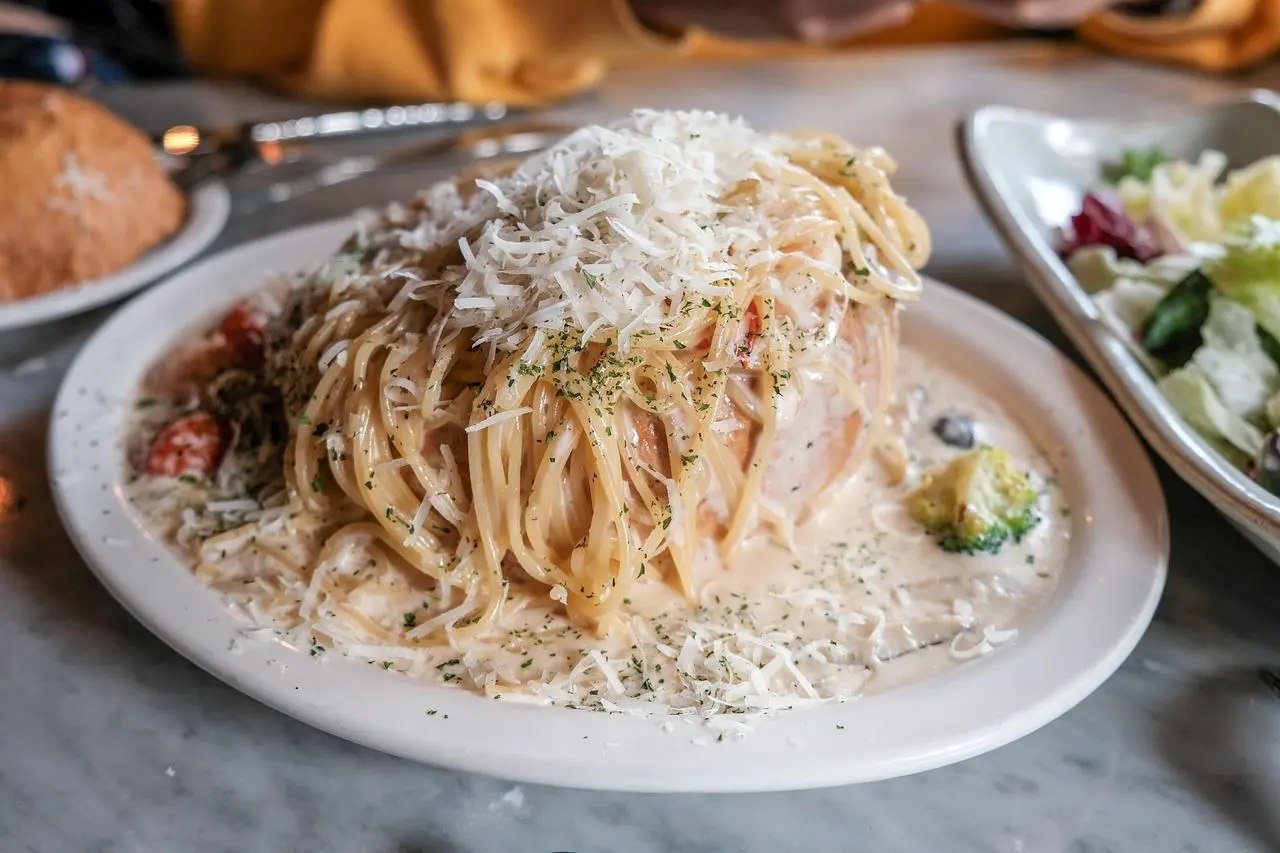
Worried your spaghetti carbonara recipe will end up as scrambled eggs? The Roman way is simple: crisp guanciale, pecorino, eggs and pepper, tossed together off the heat.
Carbonara belongs to a big family of Roman and regional favourites, and you can find more of them among our italian pasta recipes.
| Item | Value |
|---|---|
| Total time | 30 minutes |
| Spaghetti | 14 ounces |
| Guanciale | 9 ounces |
| Eggs | 5 egg yolks |
| Pecorino Romano | 7 ounces |
These figures are for four servings from The Pasta Project’s carbonara recipe, and recipes can change: check the source before you rely on them.
What goes into a Roman carbonara
Rome’s tourism office calls carbonara one of the best-known first courses of traditional Roman cuisine, even though its origin is uncertain. Turismo Roma lists the ingredients like this:
- Pasta made from durum wheat semolina
- Guanciale, the typical hog jowl
- Roman pecorino
- Eggs, with more yolk than white
- Salt and freshly ground pepper
Most chefs agree that a true carbonara contains guanciale, cured pork cheek, rather than bacon or pancetta, according to The Pasta Project. Vincenzo’s Plate adds that guanciale has a higher fat content and a distinct, rich flavour, while bacon comes from the belly.
Leave out the cream. Rome’s tourism office says plainly that a perfect carbonara has none, and The Pasta Project notes that vegetable and cream versions have become the norm in America and England, but not in Italy.
Spaghetti carbonara recipe, step by step
For four people, The Pasta Project uses 14 ounces of spaghetti, 9 ounces of guanciale, 5 egg yolks and 7 ounces of pecorino, plus black pepper. Weigh everything before you start, because the final steps move fast.
- Bring a pot of water to the boil and salt it lightly, since the guanciale and pecorino are already quite salty (The Pasta Project).
- Cut the rind off the guanciale, then cut it into cubes or strips. Fry it in a large skillet over medium heat until quite crispy, then lift it into a bowl lined with kitchen paper. It renders plenty of fat, so The Pasta Project skips the oil, although Turismo Roma browns it with a drizzle.
- Beat the yolks until frothy, then stir in the grated pecorino and some freshly ground black pepper.
- Cook the spaghetti until just short of al dente. Drain it, add it to the skillet with the warm fat, return most of the guanciale and take the pan off the heat.
- Add the egg mixture and stir quickly, so the eggs turn creamy from the heat of the pasta alone, then serve immediately (Turismo Roma).
Have the bowls, pepper and grater within reach before you drain the pasta. As Country Life puts it, timing is key, and carbonara waits for no man.
How do you keep the eggs creamy and not scrambled?
Everything comes down to heat. Country Life says the drained pasta goes into the pork pan, the pan comes away from the burner, and only then does the egg mixture go in. Too much heat and it congeals into porky scrambled eggs.
A splash of reserved cooking water loosens the sauce, but the same piece warns that too much leaves it thin, so it will not cling to the pasta. Add it a spoonful at a time.
Your choice of egg matters too. The Pasta Project says whole eggs work, yet the sauce is creamier and richer with just yolks.
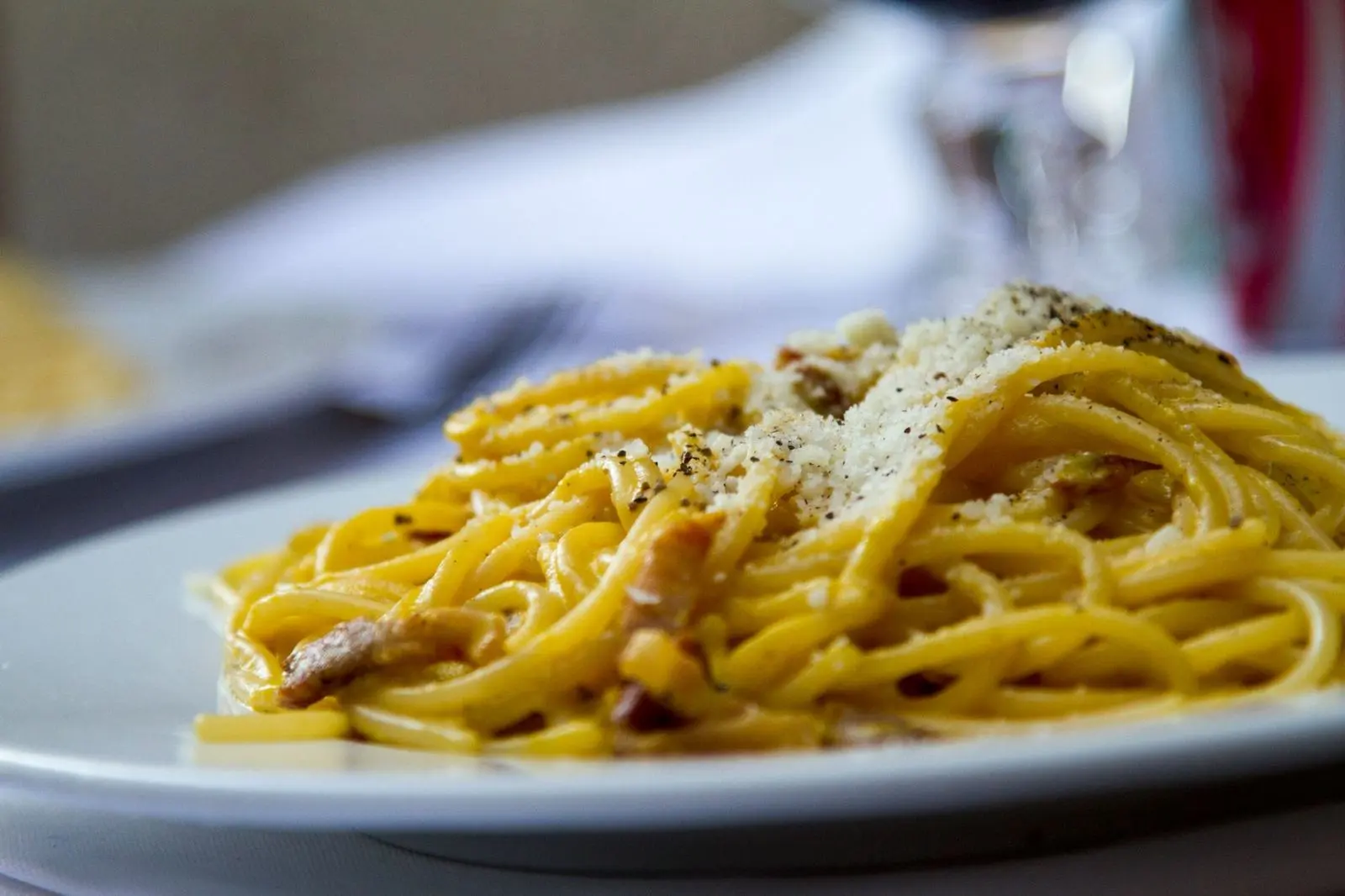
Pasta shapes, cheese swaps and Roman cousins
Spaghetti is the most common pasta for carbonara, though Wikipedia notes that bucatini or rigatoni are also used. The Pasta Project says rigatoni is the second most popular choice in Rome.
If you cannot find pecorino, you can use Parmigiano instead, but the flavour will be different, according to The Pasta Project. Pecorino is the saltier, sharper option, so taste before you add any extra salt.
Carbonara also sits in a family of Roman dishes. Vincenzo’s Plate describes it as gricia, which is pasta with guanciale, pecorino and pepper, with raw egg added.
Once the egg technique feels easy, try our cacio e pepe recipe, another of the Roman cousins. For a different pasta night, our pasta alla norma recipe is also worth a look.
Where does carbonara come from?
Nobody knows for certain. Turismo Roma mentions a link to the old cheese-and-eggs dish of the Apennine charcoal-burners, and another theory that dates the dish to 1944, when American soldiers met pasta with a flavour like their home breakfast of eggs and bacon.
The paper trail is thin. Wikipedia says carbonara was first described in a 1952 cookbook about food in Chicago.
The dish is so often adapted that it tops a list from the Accademia Italiana della Cucina of the most commonly falsified Italian recipes, as Country Life reports. Garlic, onions and cream are the usual culprits.
Frequently asked questions
Can I use pancetta if I cannot find guanciale?
Show answer
You can. Rachel Roddy, in her book Five Quarters, calls pancetta fine, and some Romans even prefer it, Country Life reports. Expect a milder result, since The Pasta Project finds guanciale richer and more intense.
Why does carbonara taste creamy without any cream?
Show answer
The silk comes from an emulsion. Vincenzo’s Plate explains that raw eggs, melted pecorino and a little starchy pasta water combine into the sauce.
Did American soldiers invent carbonara?
Show answer
It is debated. Country Life calls the powdered-egg and bacon rations story one of the more plausible theories, while Vincenzo’s Plate argues that pasta with eggs, cured pork and cheese already existed.
Should I use whole eggs or only yolks?
Show answer
Both are used. According to Vincenzo’s Plate, older versions used whole eggs for a rustic, almost scrambled texture that Italians call bavosa, and chefs later moved to yolks only for a smoother, more stable sauce.